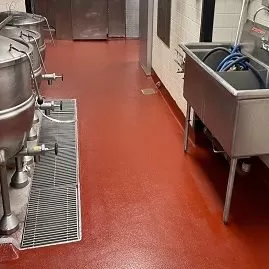
Finding the right flooring contractor is half the battle when upgrading a commercial kitchen in New Jersey. The material itself matters enormously, but even the best flooring system will underperform if installed by someone without specific food service experience. New Jersey operators searching for quality restaurant kitchen flooring NJ solutions need to evaluate potential contractors with the same rigor they apply to hiring kitchen staff. Knowing the right questions to ask will save thousands of dollars in future repairs and prevent compliance headaches down the road.
Question One: Do You Specialize in Food Service Flooring?
This is not a trick question. It is the most important one. Commercial kitchen flooring is a specialty within the broader flooring industry. The requirements for moisture testing, substrate preparation, chemical resistance, and slip performance are all different from what a general flooring contractor handles in an office building or retail space.
A specialist in restaurant kitchen flooring NJ will know New Jersey county health department requirements by name. They will understand the specific challenges of older New Jersey commercial buildings, including ground-floor moisture issues and aging concrete substrates. They will carry experience with cementitious urethane, quarry tile, and food-grade epoxy systems, and they will know which product fits which kitchen scenario.
Question Two: What Substrate Preparation Does Your Process Include?
The most common cause of premature commercial flooring failure is inadequate substrate preparation. Moisture trapped in concrete, oil contamination from a previous kitchen operation, uneven surfaces, or residual adhesive from old flooring all create adhesion problems that show up as bubbling, cracking, or delamination within months of installation.
Ask any prospective contractor to walk you through their preparation process in detail. A thorough answer includes moisture testing, surface grinding or shot blasting for profile creation, crack repair, and primer application. If a contractor glosses over substrate prep or suggests it can be minimized to save time, treat that as a red flag and move on.
Question Three: What Warranties Do You Offer?
A contractor who stands behind their work offers meaningful warranties on both materials and labor. Material warranties typically come from the manufacturer and cover defects in the product itself. Labor warranties cover the installation quality and are issued by the contractor directly.
For a food service flooring project, you want at minimum a manufacturer’s warranty on the flooring system and a contractor’s labor warranty covering installation defects for no less than one year. Longer labor warranties indicate greater confidence in the quality of work. Be cautious of contractors who cannot clearly explain their warranty terms or who offer only verbal assurances.
Question Four: Can You Provide References from Similar Projects?
References from comparable restaurant projects in New Jersey give you real-world validation. Ask specifically for references from commercial kitchens of similar size and volume to yours. A contractor who has successfully installed flooring in a busy Jersey Shore seafood restaurant or a high-volume Newark food hall has proven relevant experience.
When checking references, ask about the installation timeline, whether the contractor met health inspection requirements on the first inspection, and how the floor has held up over time. Real customers give honest answers that no sales pitch can replicate. Operators who take this step before committing to restaurant kitchen flooring NJ projects consistently report better outcomes.
Conclusion
Choosing a restaurant kitchen flooring NJ contractor is as important as choosing the material itself. Ask the hard questions, verify experience with food service environments, and insist on clear warranty terms. The right partner will deliver a floor that performs, passes inspections, and protects your operation for years to come.
Leave a Reply